










$70-$200/hr academic and research work, on your schedule
Referee a model's research and proofs the way you would a submission. Catch the unsupported leap, the misattributed citation, the result that will not replicate. Deep depth in your narrow field is the signal.
Trusted by top research companies




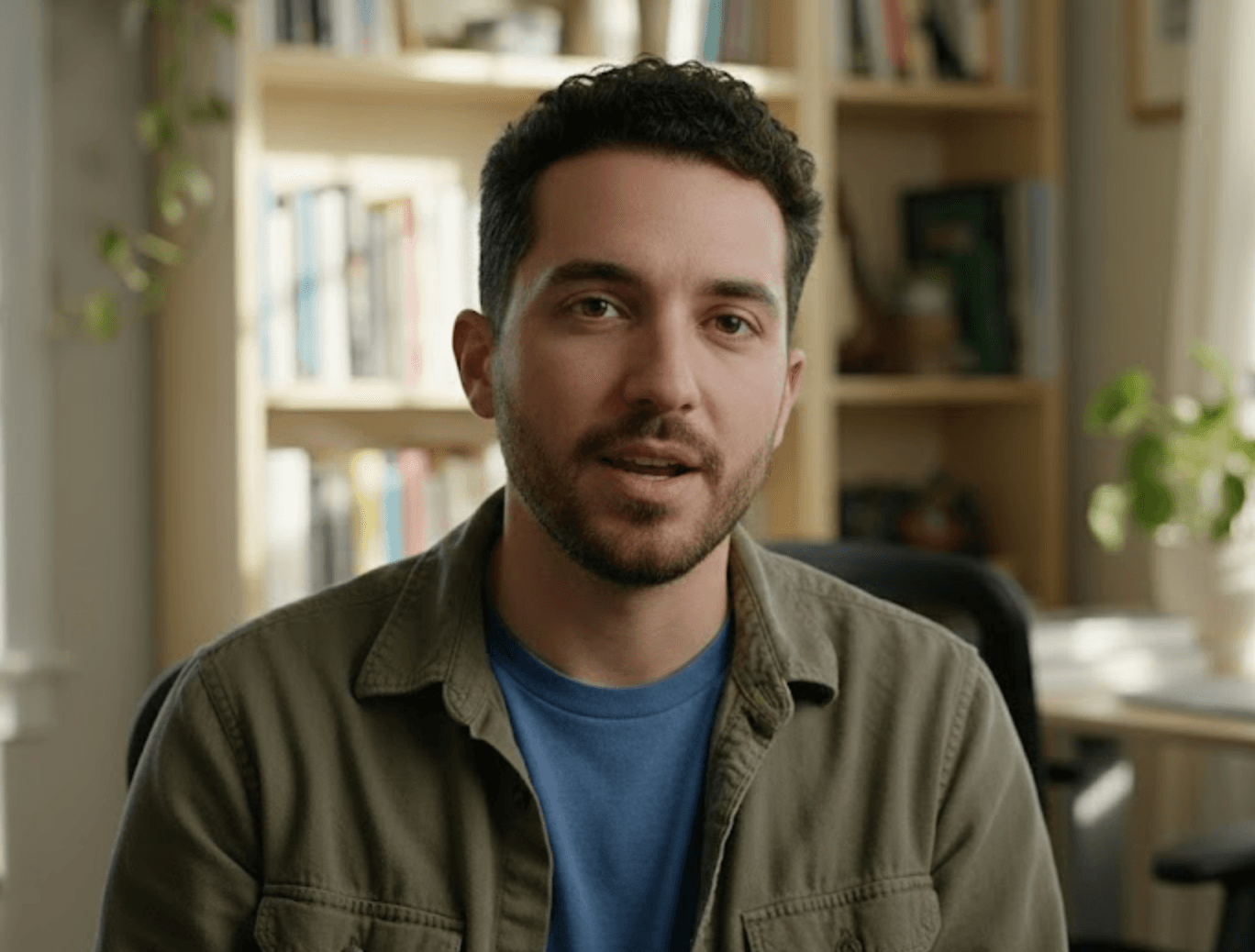
Hi, we're Zac and Jack, the founders of Terac. We want to talk to you directly, because you are the most important part of what we're building.
Terac is a community of experts. People who have spent years getting good at something specific and hard. The world is about to need more of you, not less. As AI takes on more of the world's work, the bottleneck shifts to the people who actually know what they're talking about.
Expert labor is the rarest resource in the world right now, and it is shockingly hard to find. The companies that need a referee's eye on an overstated result spend weeks chasing people, paying placement fees, and settling for whoever is available. Meanwhile thousands of qualified people are sitting with knowledge that no one ever asks for.
That gap is what we're here to close. Every project that lands on Terac is routed to the people who actually know the answer, on their schedule, paid fairly, and only when the work is verified. No middleman taking a cut of your time. No vague gigs. No chasing checks.
We care about every single person in this community. If you join Terac, you're not a row in a database to us. We read the feedback. We answer the emails. We will fight for you when a customer is being unreasonable, and we will be honest with you when something on our side is broken. The quality of this panel is our entire company, and we owe you a serious bar.
If you've made it this far, here is what we're asking: claim your profile. Put your expertise on the record. Let the world's most ambitious teams come find you for the work only you can do.
Academia & Research questions
Still curious? Write to us at support@terac.com.
Narrow specializations are often what model developers need most, because reasoning gaps cluster in technical subfields where training data is sparse. Evaluators in areas like category theory, archaeogenomics, or pre-modern philology are actively sought to stress-test outputs general reviewers cannot assess. You do not need broad coverage to contribute.
Eligibility is based on demonstrated expertise, not the Carnegie classification of your degree. PhDs from internationally accredited programs, including those outside the US, qualify when your work or publications show genuine depth. Postdoctoral experience and a strong publication record can carry as much weight as the institutional name.
No. The work evaluates and improves AI reasoning, not materials for student submission. Typical tasks annotate AI research explanations, flag bad citations or statistics, and build worked examples of expert problem-solving. If a task raises an institutional conflict-of-interest concern, flag it and it will not be assigned to you.
Mostly AI literature summaries, experimental-design critiques, statistical interpretations, and domain reasoning chains, not raw primary sources. You are not expected to access paywalled databases or use library credentials. The content is self-contained, and you judge the output against your own expert knowledge.
Interdisciplinary profiles are a distinct strength, especially for outputs needing multi-step reasoning across boundaries, such as Bayesian inference on behavioral data or genomic results in a clinical context. List both areas and you will be matched to tasks needing that combination. Pure specialists and interdisciplinary researchers are both in demand.
Why your expertise matters
Research AI misrepresents a citation, designs a study without proper controls, and pools effect sizes a Cochrane reviewer would reject. Catching that takes a practicing researcher, not a model trained on a literature full of retractions and blind spots. Your peer-review-quality judgment teaches these tools what a grant committee would actually trust.
How pay works
Top of the $70-$200/hr band goes to fields with the highest verification burden: computational biology, econometrics, climate modeling, or any domain needing a specific toolchain (Stata, MATLAB, R, GAMS). Work is remote and hourly, paid on verified completion of each batch. You never wait on a client's approval cycle.
What the work looks like
A sample of the academic and research work you would pick up. Every project is scoped, remote, and paid on verified completion.
- Review an AI-drafted literature review for misattributed findings, omitted contradictory studies, and claims the cited sources do not support.
- Write a difference-in-differences analysis from scratch, narrating each decision so the model learns how an econometrician reasons through parallel-trends testing.
- Critique a model's mock NIH R01 proposal, flagging weaknesses in the specific aims, power calculations, or primary outcome.
- Score AI experimental designs on internal validity, rating each threat to inference (selection, attrition, contamination) and explaining why.
- Write a prompt-and-response pair showing how an expert handles a student on p-hacking, drawing the exploratory-versus-confirmatory line.
- Stress-test an AI-summarized systematic review for correct PICO application and whether the pooled estimate matches the cited studies.
Specialties we match
Academia & Research projects span a wide range of focus areas. Tell us where you go deep and we route the work that fits.
- Systematic literature review
- Experimental design and controls
- Statistical inference (frequentist and Bayesian)
- Causal identification strategies
- IRB protocol and research ethics
- Stata / R / Python for empirical analysis
- Grant writing and NIH/NSF framing
- Peer review and manuscript critique
- Meta-analysis and effect-size estimation
- Qualitative coding and grounded theory
- Computational reproducibility
- Citation integrity and source verification


